


Choosing an early education centre is one of those decisions that is both practical and deeply personal. You are not just looking for a place that “has vacancies”, you are looking for the right fit for your child and your family.
A tour is your best chance to see how a centre really works day to day, meet educators, and understand the learning approach, routines, and communication style. To make it easier, here is a simple, parent/carer-friendly checklist you can use to feel prepared, ask the right questions, and compare options confidently.
Before you visit: 10 minutes of prep that makes the tour more useful
1) Clarify your non-negotiables
Write down what matters most for your family. For example:
- Days and hours you need, including early starts or late pickups
- Budget and how Child Care Subsidy might apply
- Location and commute
- Meals and dietary needs
- Sleep routines
- Whether you want a preschool program for ages 3–5
- How you prefer to communicate (app, phone, email, in person)
2) Check the service’s quality rating
In Australia, approved early childhood education and care services are assessed and rated against the National Quality Standard, and those ratings are designed to help families choose.
On the tour, you can ask what their quality rating is, and what they are working on as part of continuous improvement. This is also a recommended question from the NSW Department of Education.
3) Bring your child, if you can
How your child responds to the environment matters. A warm welcome, gentle engagement, and calm transitions can be easier to spot when your child is with you. (If you cannot bring them, ask about orientation and transition options instead.)
What to look for during the tour (even before you ask a question)
Some of the most useful information is what you notice, not what you are told.
A quick “feel” check
- Do you feel welcomed and comfortable asking questions?
- Are educators down at children’s level, talking with them, not just managing them?
- Do children look settled, engaged, and supported?
- Is the space clean, calm, and set up for children to succeed?
Safety and supervision
You are not expected to audit policies on a walk-through, but you can observe:
- Sightlines: can educators see children across indoor and outdoor spaces?
- Entry/exit points: are they controlled and secure?
- Sleep spaces: are children appropriately monitored during rest time?
- Hygiene spaces: nappy change and bathroom areas look and smell clean
The best questions to ask on a childcare tour (grouped by what families care about most)
You do not need to ask everything. Pick the questions that match your priorities.
Daily routine and your child’s day
-
What does a typical day look like for my child’s age group?
-
How much time is spent outdoors each day?
-
How do you support children who are unsettled at drop-off? (Look for answers that reflect consistency, comfort, and partnership with families.)
-
How are rest and sleep handled? Are routines flexible where possible? Are children supervised while sleeping?
-
How do you communicate with families about the day? Many centres use an app for updates, learning stories, and messages.
Educators, staffing, and relationships
-
Who will be in my child’s room, and how do you support continuity of care?
-
How do educators get to know each child’s needs, interests, and family routines?
-
What does professional learning look like for your team?
-
What are your educator-to-child ratios, and how do you ensure adequate supervision?
Learning program and preschool preparation
-
What guides your learning program and educational approach?
-
How do you plan learning experiences and respond to children’s interests?
-
How do you support social and emotional development, like friendships and big feelings?
-
If my child is preschool age, what does your preschool program look like and how do you support the transition to school?
Health, nutrition, and wellbeing
-
Are meals provided? Can you show me a sample menu?
-
How do you manage allergies and dietary requirements?
-
What happens when children are unwell? What are the exclusion guidelines and how are outbreaks managed?
Inclusion and additional needs
-
How do you support children with additional needs or learning differences?
-
How do you partner with families and external professionals if support plans are needed?
Behaviour guidance and supporting positive interactions
-
How do educators respond when children are having a hard moment?
-
How do you support positive behaviour, and what is your approach to guiding children’s choices?
Practical details families often forget to ask
-
What are your opening and closing hours, and what happens if we are running late?
-
What are the fees, and are there additional costs beyond the daily fee?
-
How do bookings, absences, and extra days work?
-
What does orientation look like before my child starts?
How to compare centres after your tours
When you tour more than one centre, they can start to blur together. Right after each visit, jot down quick notes under these headings:
- First impressions: welcomed, calm environment, educators engaged with children
- Safety and supervision: secure entry, clear supervision, clean spaces
- Learning approach: aligns with what you want for your child
- Communication: you can picture a smooth partnership with the team
- Practical fit: hours, fees, availability, commute
- Transition support: orientation, settling-in approach
Tip: If something felt “off” but you cannot name it, trust that and ask a follow-up question. A good service will welcome your curiosity.
A quick note on quality ratings (and how to use them well)
Quality ratings can be a helpful starting point, and services are required to display their rating. If a service is not yet assessed, it may display a provisional rating indicating it has not yet been assessed under the National Quality Framework.
On your tour, you can ask:
- What is your current rating?
- What strengths are you most proud of?
- What are you currently improving, and how?
This keeps the conversation practical and focused on your child’s experience.
FAQs
How long should a tour take?
Most tours are around 20–45 minutes. The most useful tours include time for questions and a walk through the key spaces your child would use.
Should I bring my child to the tour?
If you can, yes. It helps you see how your child responds, and how educators engage with them. If you cannot, ask about orientation options and gradual transitions.
What is the single best question to ask?
“What does a typical day look like for children my child’s age?” It quickly reveals routines, priorities, and how intentional the program is.
What if I forget to ask something?
Email or call after your visit. A service that values partnership will be happy to follow up.
Ready to take the next step?
A tour is not a test. It is a conversation that helps you find the right place for your child to belong, learn, and thrive.
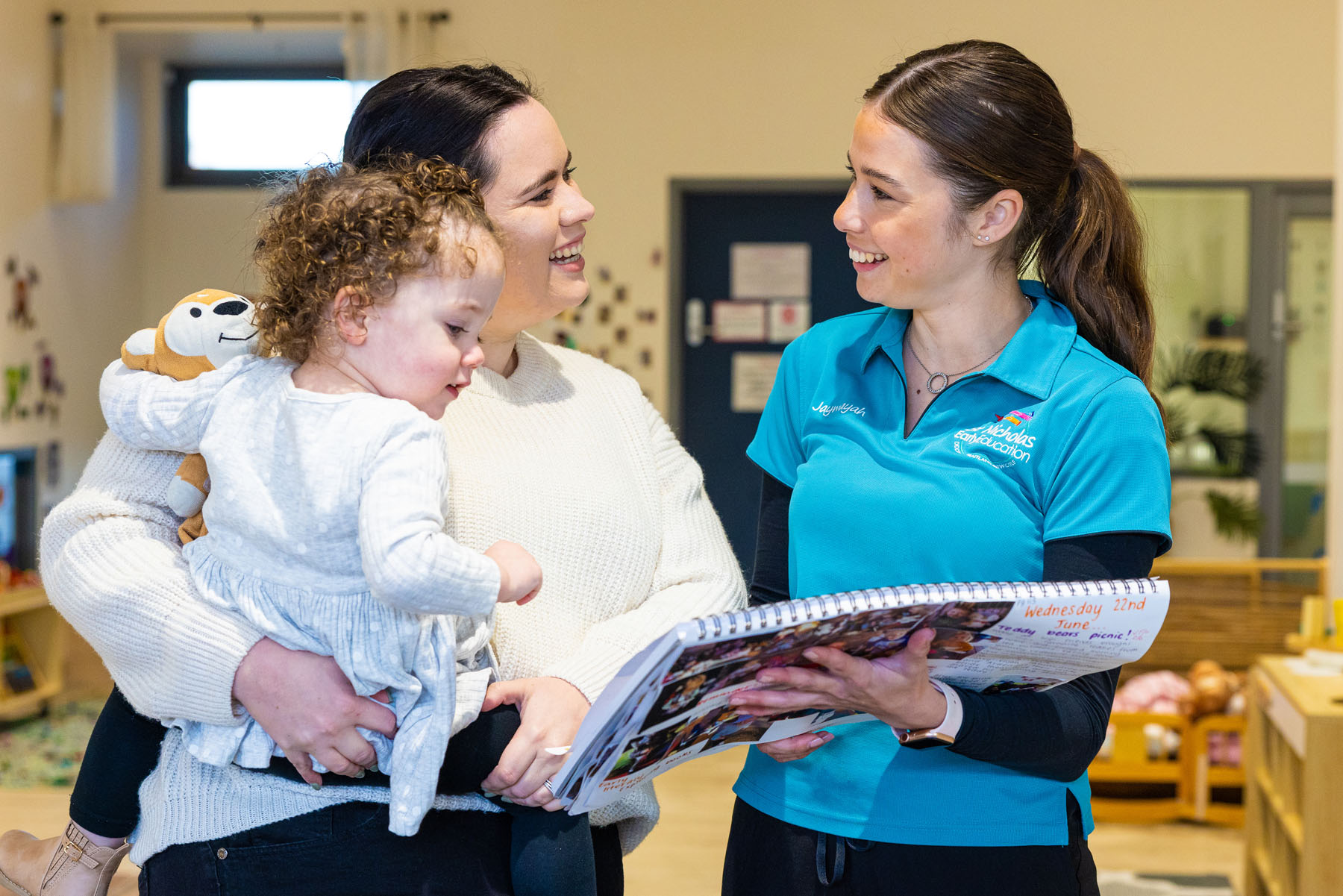
If you would like to visit St Nicholas Early Education, we invite you to book a tour at your preferred centre. Our team will talk you through daily routines, learning programs, nutrition, and how we support children to settle in confidently.